Can a tow truck refuse to take my car in Louisiana?
Yes, but only in specific situations under Louisiana law. Here's when an operator can refuse, and your rights in the New Orleans metro.
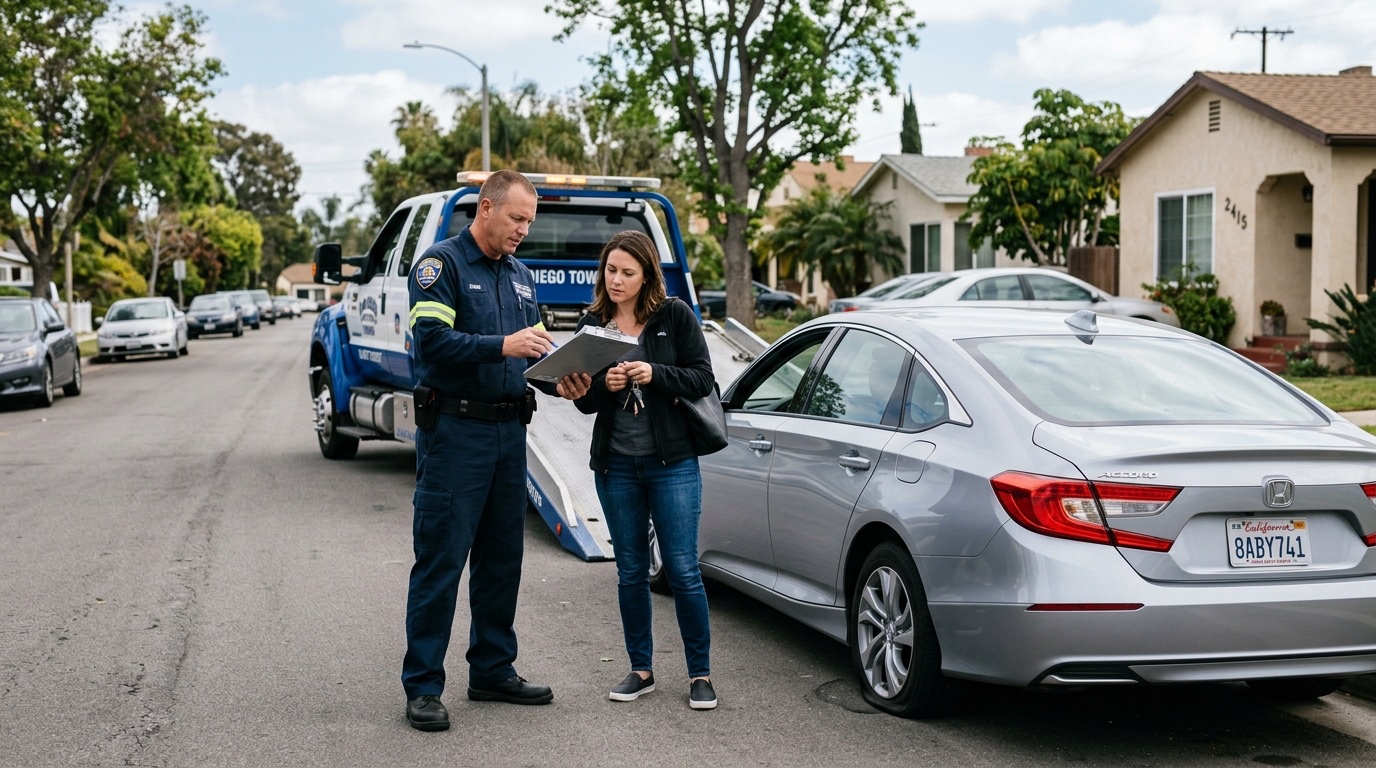
What you'll learn
- The legitimate reasons a Louisiana tow operator can refuse a job
- When an operator is expected to take the job (police dispatch, insurance dispatch)
- What Louisiana's Towing and Storage Act and the LPSC's rate rules actually say
- Your rights as the vehicle owner if you are refused
- What to do next if no one will take your call
Step by step
- Reason 1 - Vehicle weight or size exceeds the truck rating (e.g., a Light Duty wheel-lift truck for a loaded box truck).
- Reason 2 - Vehicle is unsafe to tow (hazardous fluid leak, fire risk, structural collapse).
- Reason 3 - Driver cannot verify ownership (no registration, suspected stolen vehicle).
- Reason 4 - Location is unsafe for the operator (active hostile environment, no safe pull-off).
- Reason 5 - Operator does not service that area or that vehicle type (e.g., EV refusal from a non-flatbed-equipped operator).
- When an operator is expected to take it: police-directed scenes, and your own insurance or motor club dispatch on the operator they sent.
If a tow operator refuses your call and you are stranded in an unsafe spot, call 911. Louisiana's DOTD Motorist Assistance Patrol (MAP) runs a fixed daytime and nighttime route on I-10, I-610, and I-55 in the metro, but it's not a call-out service - it only helps if it's already on scene. MAP can move your vehicle out of the travel lane; it doesn't tow it away.
The short answer
Yes, a Louisiana tow operator can refuse to take your vehicle - but only in specific situations, not because they don't feel like making the trip, because you're not paying enough, or because they prefer another customer waiting in queue. If an operator refuses your call and the refusal doesn't fit one of the legitimate reasons below, you have recourse.
The legitimate reasons a Louisiana tow operator can refuse
- The vehicle exceeds the truck's safe rating. Louisiana's tow-truck weight classes, set by the Louisiana Public Service Commission for rate purposes, run Light Duty (10,000 lbs or less), Medium Duty (10,001 to 26,000 lbs), and Heavy Duty (26,001 lbs and up). A Light Duty wheel-lift cannot safely tow a loaded box truck or bus. The operator should dispatch the right equipment or refer you to a heavy-duty operator.
- The vehicle is unsafe to tow. Active fluid leak (gasoline, brake fluid, hydraulic), structural collapse, fire risk, hazardous cargo. Operators are not required to tow vehicles that pose a safety risk to the operator, other drivers, or property.
- Ownership cannot be verified. If you cannot produce a driver's license, registration, or other proof that you have authority to move the vehicle, the operator can refuse. This matters most for vehicles flagged as possibly stolen or vehicles being moved without the owner's consent.
- The location is unsafe for the operator. An active hostile environment, no safe pull-off, an unstable shoulder, or a construction zone with no operator access. The operator may refuse pending the location being made safe.
- The operator does not service that vehicle type or that area. An operator without flatbed equipment may legitimately refuse an AWD or EV call. They are expected to tell you so you can call another operator.
When an operator is expected to take the job
- Police-directed scenes. Louisiana's private-property towing law, La. R.S. 32:1736, puts real standing obligations on any operator doing a nonconsensual tow: posted signage naming the company, its address, and its phone number in lettering at least 2 inches tall at every entrance and exit, plus an itemized invoice on every job. Police can also directly dispatch an operator to a crash or breakdown scene, and staying reliable for those calls is part of how an operator keeps that standing relationship with local law enforcement.
- Your insurance or motor club dispatching them to you. If your insurer or a motor club has dispatched a specific operator to your location, that operator is contractually bound to the club, not just to you. Refusal triggers contract penalties.
- An existing service agreement with your property. Operators contracted by an HOA, apartment complex, or commercial property must respond to property-management calls within the contract's response window.
Louisiana rules that matter here
The Louisiana Towing and Storage Act - private property towing (La. R.S. 32:1736)
Louisiana doesn't run towing regulation through a county ordinance the way some states do. Instead, the state's own Towing and Storage Act (La. R.S. 32:1711 et seq.) sets the rules directly. Under R.S. 32:1736, an operator can't perform a nonconsensual tow from a parking area unless law enforcement authorized it or the vehicle was properly tagged. Property owners must post signage at every entrance and exit naming the towing company, its address, and its phone number. Operators must hand over an itemized billing invoice. The most important part: every fee charged for a nonconsensual tow off private property has to be uniform and set according to rules from the Louisiana Public Service Commission (LPSC) - the operator doesn't set its own private-property tow price. Overcharge a customer and that customer can recover the excess fee plus attorney's fees and court costs; violations are an offense under La. R.S. 14:68.4 that can cost an operator its towing license.
The LPSC rate schedule - the actual price caps
The Louisiana Public Service Commission sets maximum statewide rates for nonconsensual towing, updated every April 1st. Under the current schedule (effective 4-1-2026): Light Duty runs $152.50/hour with a 1.5-hour minimum, or a $152.50 flat rate off private property; Medium Duty runs $335.00/hour with a 1-hour minimum; Heavy Duty runs $430.50/hour with a 1-hour minimum. Storage runs $34.00/day outside or $40.50/day covered. A gate fee or after-hours personal-property retrieval fee is capped at $64.50, and there's no fee at all for retrieving personal items during normal business hours. Every invoice has to be itemized and list the LPSC's own complaint address, and tow companies must accept credit cards.
Booting rules (La. R.S. 32:1741)
Booting a vehicle on private property is regulated too. A booting company must carry at least $1,000,000 in general liability insurance and post a $10,000 surety bond. Signage at the lot has to be at least 18 inches wide by 24 inches tall, naming the company, its phone number, and the removal fee, and that phone has to be staffed by a live person 24 hours a day. No boot-removal fee at all can be charged if personnel don't show up within 90 minutes of the call. A vehicle owner can request an administrative hearing within 10 days to contest the boot itself or the fee charged.
Storage, notice, and lienholder rights
If your vehicle is stored, the facility has to notify you (and any lienholder) within 10 business days by mail, or 5 business days if your information reached them electronically, and that notice has to spell out your right to request an administrative hearing under La. R.S. 32:1727 (R.S. 32:1720). A lienholder can get the vehicle released by paying the towing and storage charges in full and signing a hold-harmless agreement (R.S. 32:1720.1). Self-park garages and lots have to report a vehicle left more than 20 days without a written storage arrangement (R.S. 32:1721).
Tow truck driver licensing
Louisiana doesn't issue a single statewide towing operator license a consumer can look up either. The Towing and Storage Act creates a licensing and regulatory framework administered by the office of state police, not a county business-tax-receipt system. A commercial driver's license (CDL) is required to run a tow truck rated 26,001 pounds or more; lighter trucks run on a standard Louisiana driver's license.
Your rights as the vehicle owner
- Right to know who has your vehicle. In Orleans Parish, New Orleans's Find My Towed Vehicle line, (504) 658-8100, can confirm whether your vehicle was towed; call (504) 658-8284 to check a fee balance. In unincorporated Jefferson Parish, the Jefferson Parish Sheriff's Office, (504) 363-5500, handles impound matters.
- Right to a written, itemized invoice. Every invoice for a nonconsensual tow must be itemized and list the LPSC's complaint address so you know exactly where to push back.
- Right to dispute an excessive charge. A written complaint to the LPSC (P.O. Box 91154, Baton Rouge, LA 70821, or lpsc.louisiana.gov) stops storage fees from accruing as of the date you file, and the Commission can order a refund of up to 200% of any overcharge. You don't have to pay the invoice first to have standing to complain.
- Right to a hearing on a boot or a stored vehicle. You can request an administrative hearing within 10 days to contest a boot's validity or fee, and a hearing under R.S. 32:1727 to contest a stored vehicle's charges.
- Right to pay by credit card. The LPSC requires tow companies to accept credit cards, and any processing fee passed through must be itemized separately.
- Right to insist on flatbed for EVs, AWD, lowered, or damaged vehicles. The operator is responsible for using a method that won't damage your vehicle.
What to do if an operator wrongfully refuses you
- Document the refusal. Get the operator's name, company, truck plate, time, and stated reason.
- Call another operator right away. Quick Tow New Orleans or another reputable operator will dispatch.
- If you're stranded somewhere unsafe, call 911. Louisiana's DOTD Motorist Assistance Patrol (MAP) is not a call-out service - it patrols a fixed daytime and nighttime route on I-10, I-610, and a few other corridors in the metro. If MAP happens to already be nearby, it can move your vehicle out of the travel lane, but you can't request it the way you can request a tow. It doesn't tow vehicles away either way, so you'll still need a private tow to finish the job.
- File a complaint with the Louisiana Public Service Commission if the refusal or the pricing looks predatory: P.O. Box 91154, Baton Rouge, LA 70821, or lpsc.louisiana.gov.
New Orleans-metro patterns we see
- Rental-car and cruise-passenger refusals. A driver in an out-of-state or rental vehicle near MSY, or a cruise passenger parked near the Erato or Julia Street terminals, sometimes gets refused because the operator can't verify the rental paperwork on the spot. Pull up the rental agreement on your phone before you call - it usually resolves this fast.
- EV refusals. A wheel-lift-only operator should refuse rather than wheel-lift an EV. That's the correct call, and they're expected to refer you to a flatbed operator. We match those drivers with a flatbed operator.
- Heavy-duty cascades on I-10. A box truck or bus breaks down on the High Rise or the Westbank Expressway and a wheel-lift operator arrives, then refuses. Correct - they shouldn't tow what they can't handle - but they should refer you to a heavy-duty operator rather than just leaving.
- Parade-season surges. During Mardi Gras, city crews tow hundreds of vehicles off parade routes in a single weekend under the posted no-parking window, and private operators get slammed at the same time with recovery calls for cars boxed in by barricades. Expect a longer wait than normal if you're stuck on a side street during a parade.
- Storm-season demand spikes. During an active storm or the days right after - the kind of event Katrina and Ida both were - every operator in the metro gets slammed at once, and "we can't get to you for hours" is often true capacity, not bad faith. Call early if you're evacuating and your vehicle already has trouble.
When a call on this line gets turned down (and why)
An operator turns a call down when: (1) The vehicle has an active fuel leak another operator on scene is already addressing. (2) The location is inside an active police perimeter and nobody can get clearance. (3) The caller can't produce ID or registration and the vehicle looks like a possible recovered-stolen situation. (4) The vehicle is over the truck's gross weight rating, in which case we match you with a heavy-duty operator instead. Every refusal should come with a clear explanation and, where possible, a referral.
Filing a complaint - useful contacts
- Louisiana Public Service Commission - P.O. Box 91154, Baton Rouge, LA 70821, or lpsc.louisiana.gov, for excessive-rate and billing complaints on nonconsensual tows.
- City of New Orleans, Find My Towed Vehicle - (504) 658-8100, confirms whether and where your vehicle was towed within Orleans Parish.
- Jefferson Parish Sheriff's Office - (504) 363-5500, for impound matters in unincorporated Jefferson Parish.
- DOTD Motorist Assistance Patrol - free, fixed-route roadside help on I-10, I-610, and I-55 in the metro; not a call-out service.
- 511la.org - Louisiana's official real-time traffic and incident information service.
Rather have a pro handle it?
Towing and roadside service across the New Orleans metro. One local line, taking calls 24/7.
Keep learning.
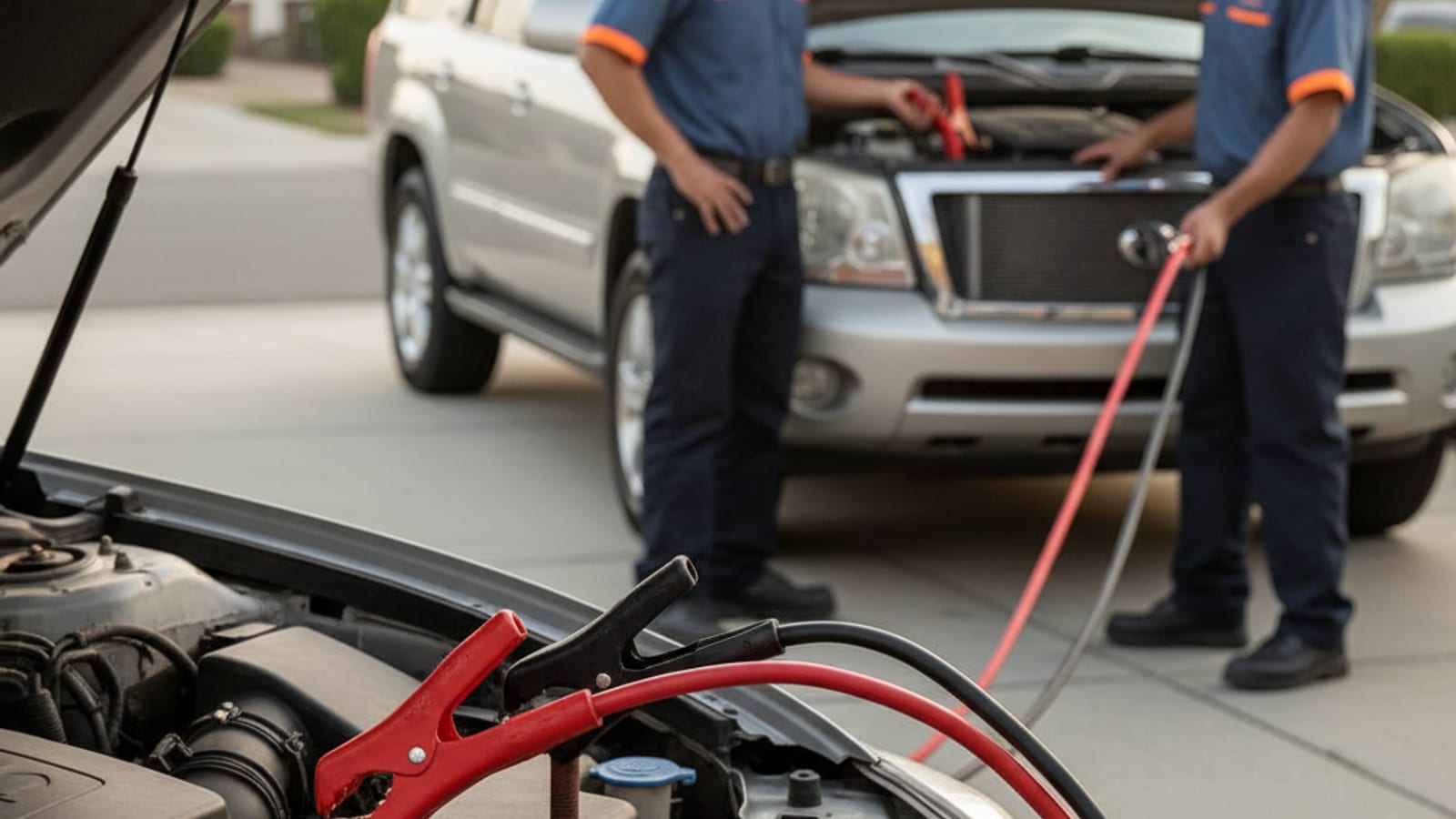
Jump-start a dead battery safely
Jumper cables are simple until you hook them wrong. Do it right and you'll avoid sparks, ruined electronics, and a tow you didn't need.
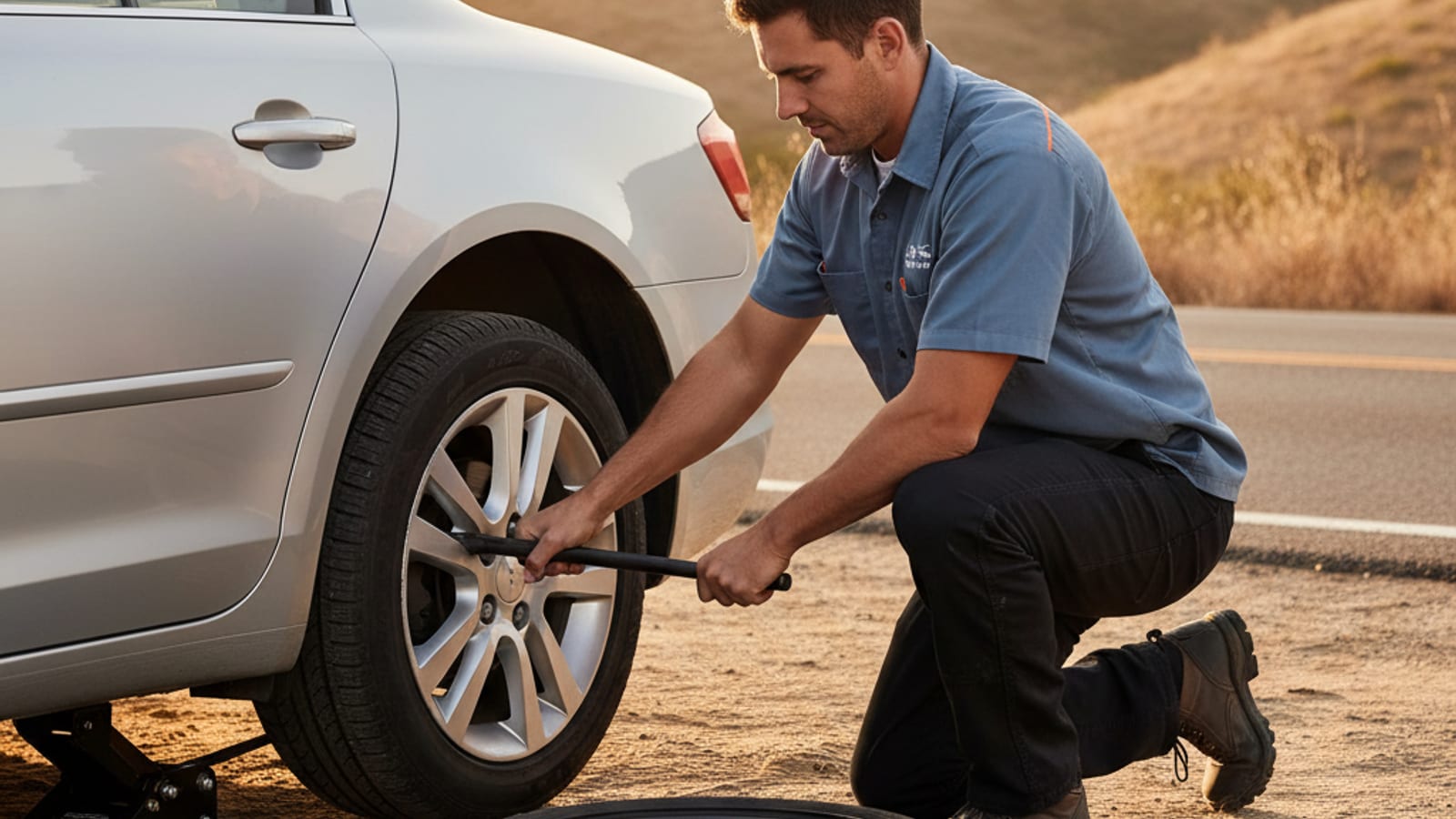
Change a flat tire on the side of the road
The difference between a 20-minute shoulder stop and an hour on the phone with a tow company is knowing where the spare and jack live before you need them.
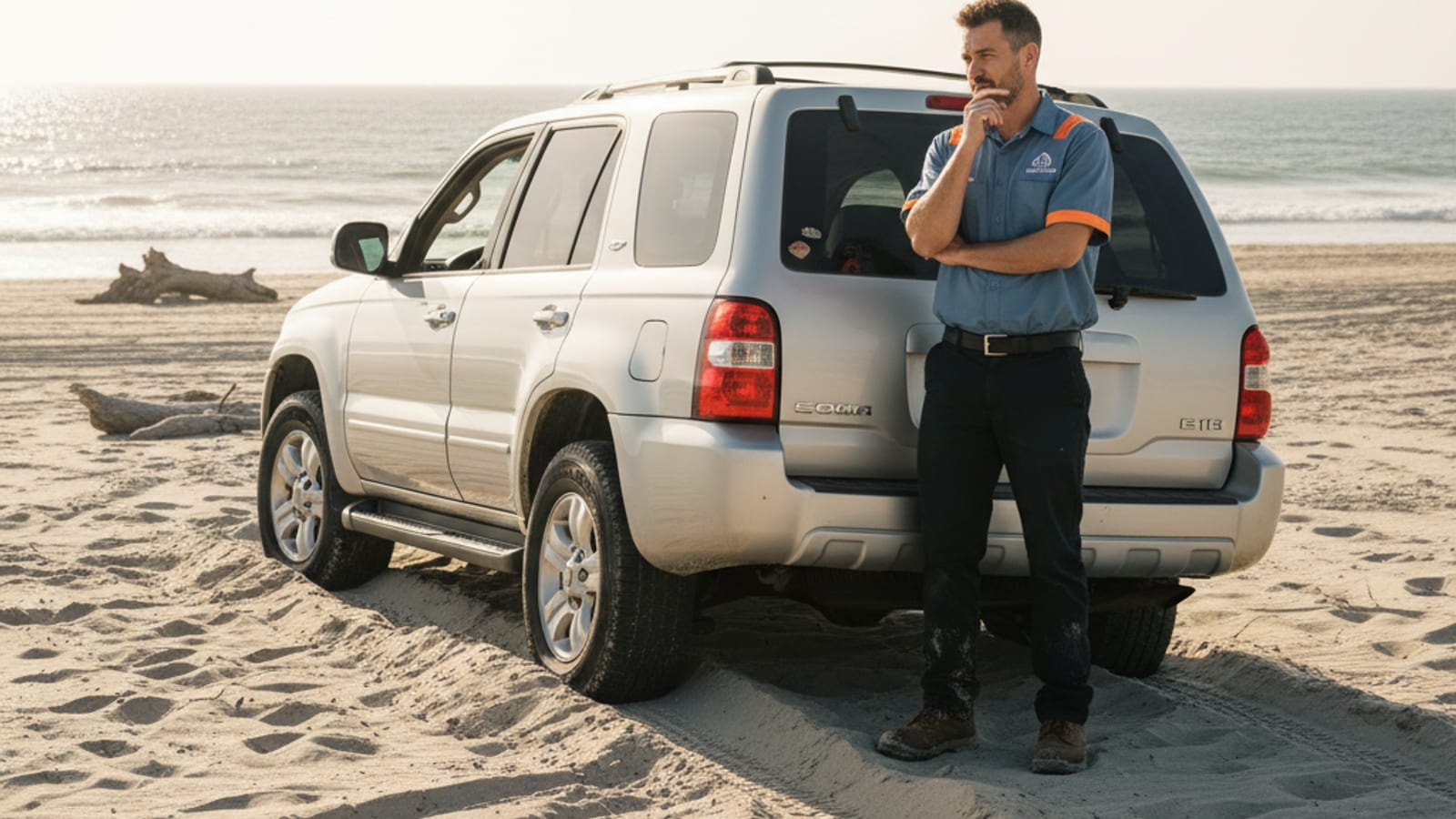
What to do when your car floods out or gets stuck in mud
New Orleans's drainage pumps can't outrun an ordinary summer storm, and half the city sits at or below sea level. First step: stop making it worse.